Buffalo Zoo herpetology team conducting key research to help save threatened rattlesnake species
World Snake Day was celebrated on July 16, and fittingly, there’s been plenty of focus in the Buffalo Zoo’s Amphibian and Reptile Center recently on a threatened rattlesnake species.
The Buffalo Zoo is proud to be recognized as one of just a few breeding centers for the eastern massasauga rattlesnake (EMR) within the species’ Association of Zoos and Aquariums SAFE: Saving Animals From Extinction Eastern Massasauga Rattlesnake program. Through this, our herpetology team has been hard at work researching to learn more about this snake.
The most prominent example is the male to male combat trials recently conducted among the population of eastern massasauga rattlesnakes entrusted to us, which mimic a natural, ritualized behavior of the snakes in the wild that connects with mate selection.
Our herpetology team monitors the combat trials to gather crucial data, and the findings are used to better understand the snakes and their breeding habits. The hope is that by allowing these behaviors to take place during the snakes’ natural breeding season, it can improve reproductive success.


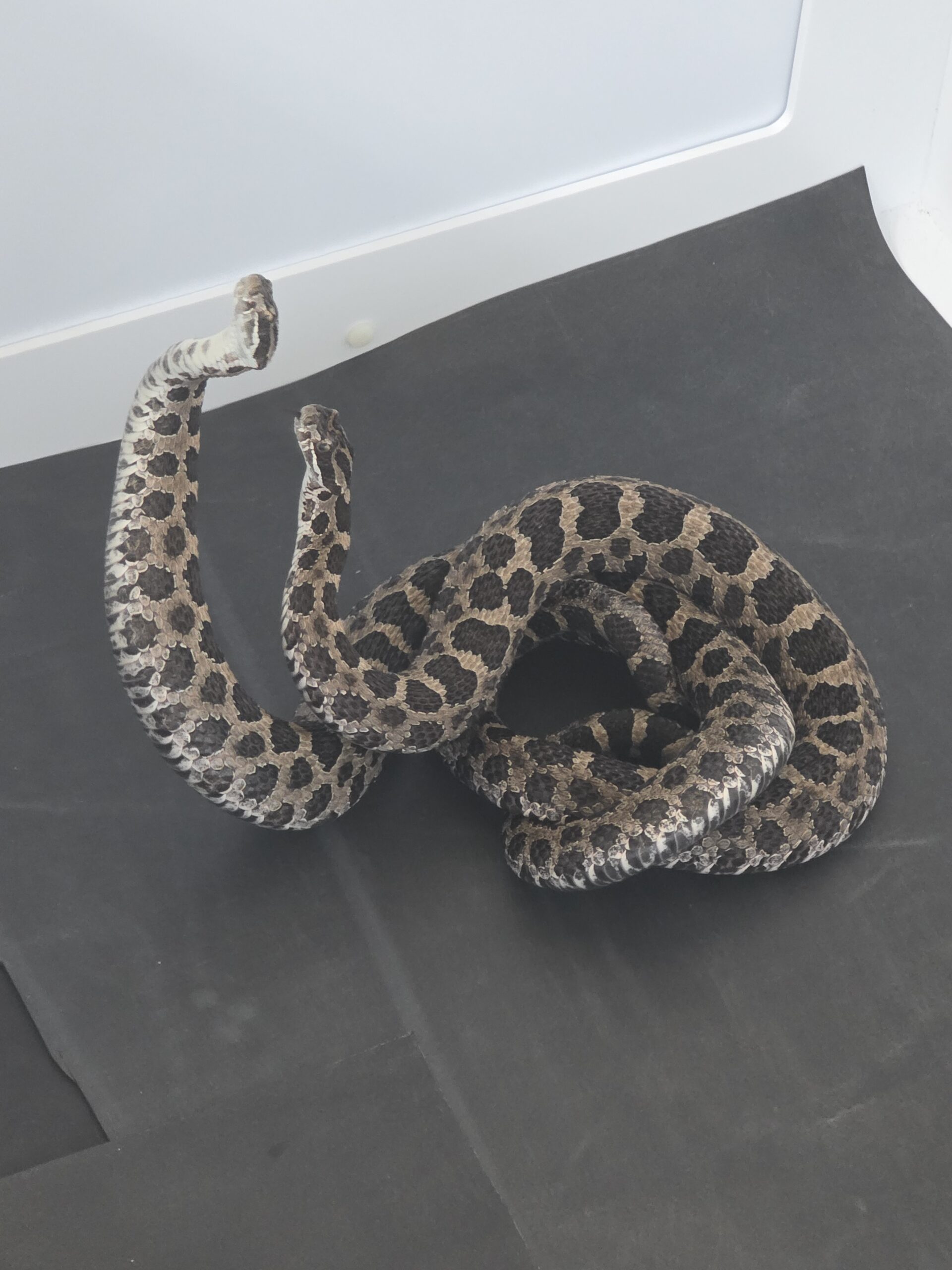
Eastern massasauga rattlesnakes are considered threatened within the United States, and their populations in the wild have suffered a serious decline. Today, the snakes are found largely in the eastern parts of the Midwest and portions of the Great Lakes region. It is the only venomous snake native to Ontario.
The snakes are venomous, but not very large in length, as they grow to about 24 to 30 inches on average. They are typically tan in color with large, darker blotches appearing on much of their body.
Conservation efforts like SAFE are making a huge impact in ensuring these animals can thrive for years to come. There is hope that these studies, along with other husbandry advancements, will improve reproductive success in eastern massasaugas under human care. Further sustainability of the EMR SAFE populations is a major step toward supporting the long-term conservation of this native North American species.
You can learn more about the eastern massasauga SAFE program here.