Critically endangered addax calf born at the Buffalo Zoo
The Buffalo Zoo is thrilled to announce the birth of a critically endangered addax calf, which entered the world on July 4, 2026.
The calf, born to mom Patricia (4) and dad Dune (3), is doing incredibly well in mom’s care and can be seen by visitors in the Zoo’s addax habitat most mornings beginning Wednesday, Aug. 5. The baby does not yet have a confirmed gender or name.
It is the 25th addax born at the Buffalo Zoo since 1991.
“This addax birth marks an extraordinary feat of conservation, helping save a critically endangered species from extinction,” said Buffalo Zoo President & CEO Lisa Smith. “The Buffalo Zoo is proud to have such a successful history of addax breeding, and this calf will serve as an integral ambassador for their wild counterparts. We can’t wait for visitors to get acquainted with this adorable new addition to our herd.”
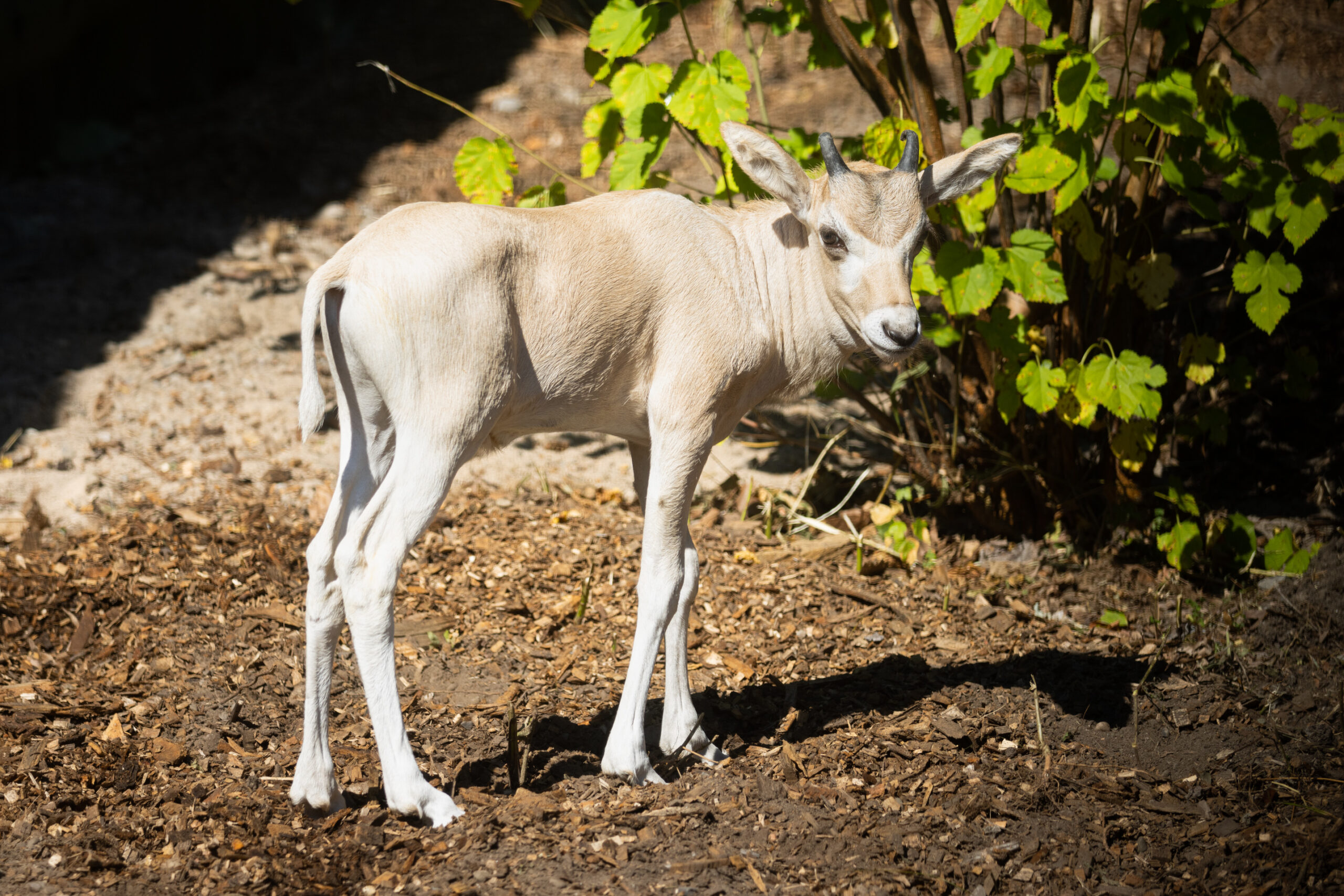
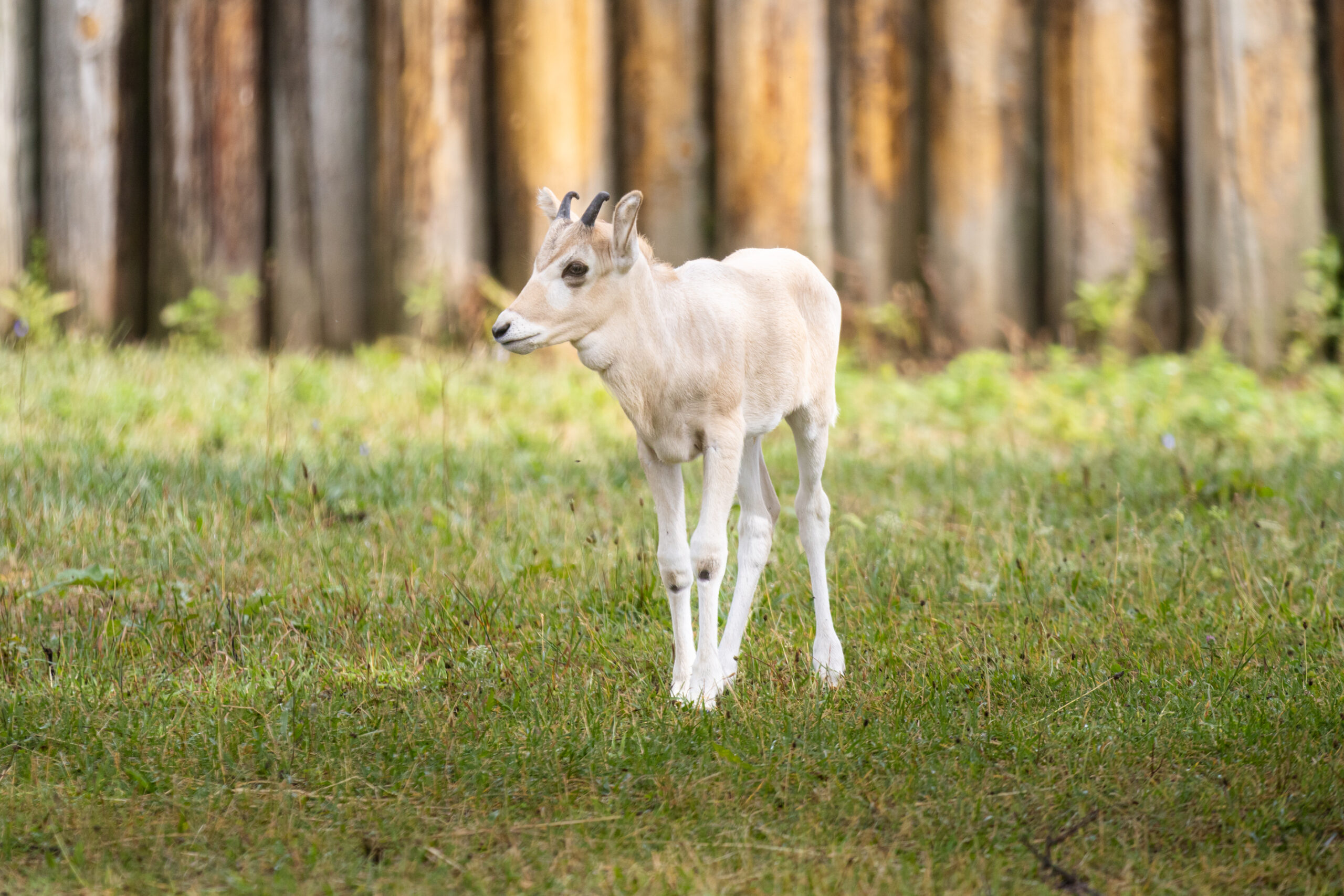
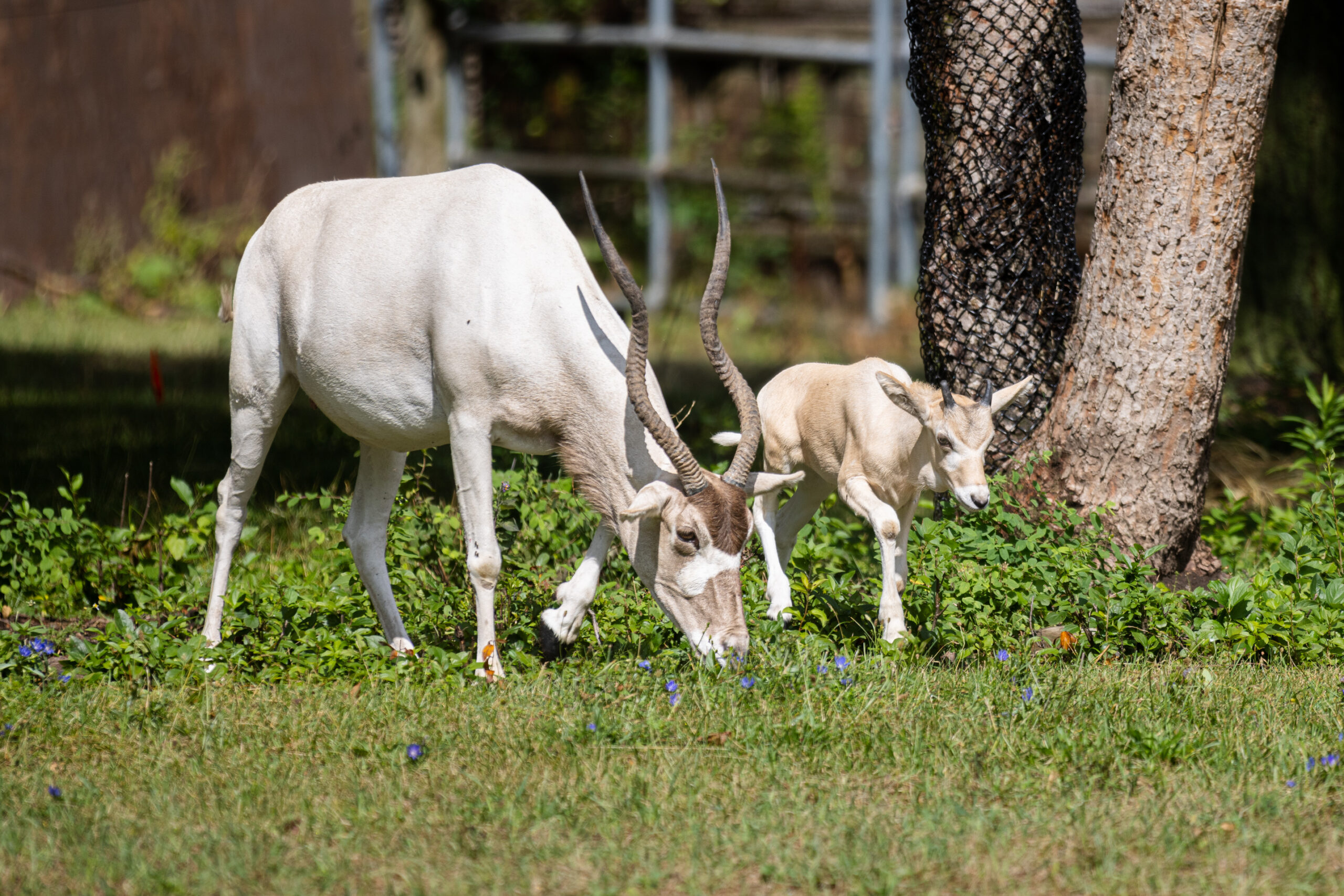
Animal keepers have observed the addax calf energetically running around their behind-the-scenes barn and habitat as mom diligently watches on. The calf is also getting along very well with the rest of the Zoo’s addax herd.
Listed as critically endangered by the International Union for Conservation of Nature (IUCN), it is estimated that just about 100 addax remain in their native habitat, the deserts of North Africa. Threats like drought, poaching and habitat loss from oil drilling have all played a role in their drastic decline in numbers. It is only through dedicated conservation efforts that addax have not gone extinct in the wild.
Despite their dwindling wild numbers, addax have much stronger populations in zoos and wildlife facilities around the United States, Europe and Asia. It is through programs like the Association of Zoos and Aquariums’ Species Survival Plan, which brought both Patricia and Dune to Buffalo, that allow these critical conservation efforts and addax births to take place.
Addax are a type of antelope, whose defining feature is a white “X” of fur that is clearly visible on their face. They can grow to nearly 250 pounds and can have a standing shoulder height of about three feet. They are herbivores, surviving in the wild by eating desert grasses.
This birth is just one part of the Buffalo Zoo’s broader conservation mission, which seeks to build community, create connections, and save wildlife. The Buffalo Zoo is open seven days a week from 10 a.m. to 5 p.m., with last admission at 4 p.m. General admission tickets can be purchased in advance online here, or in-person at the front entrance gate.