
See how keepers treat a small crack in black rhino Romeo’s horn
When our black rhino Romeo arrived to the Buffalo Zoo just over two years ago, our hoofstock team made a noteworthy discovery about the largest of his two horns: it had a small crack within it.
While cracks in horns are common in black rhinos and not anything too alarming, our keepers still wanted to ensure it didn’t get any worse and that Romeo could continue to thrive.
So how do you care for a crack in a black rhino’s horn? With trust, attentiveness — and what could best be described as a horn-icure.
When the process started, the main goal was to prevent the crack from getting to the base of Romeo’s horn by flattening it.
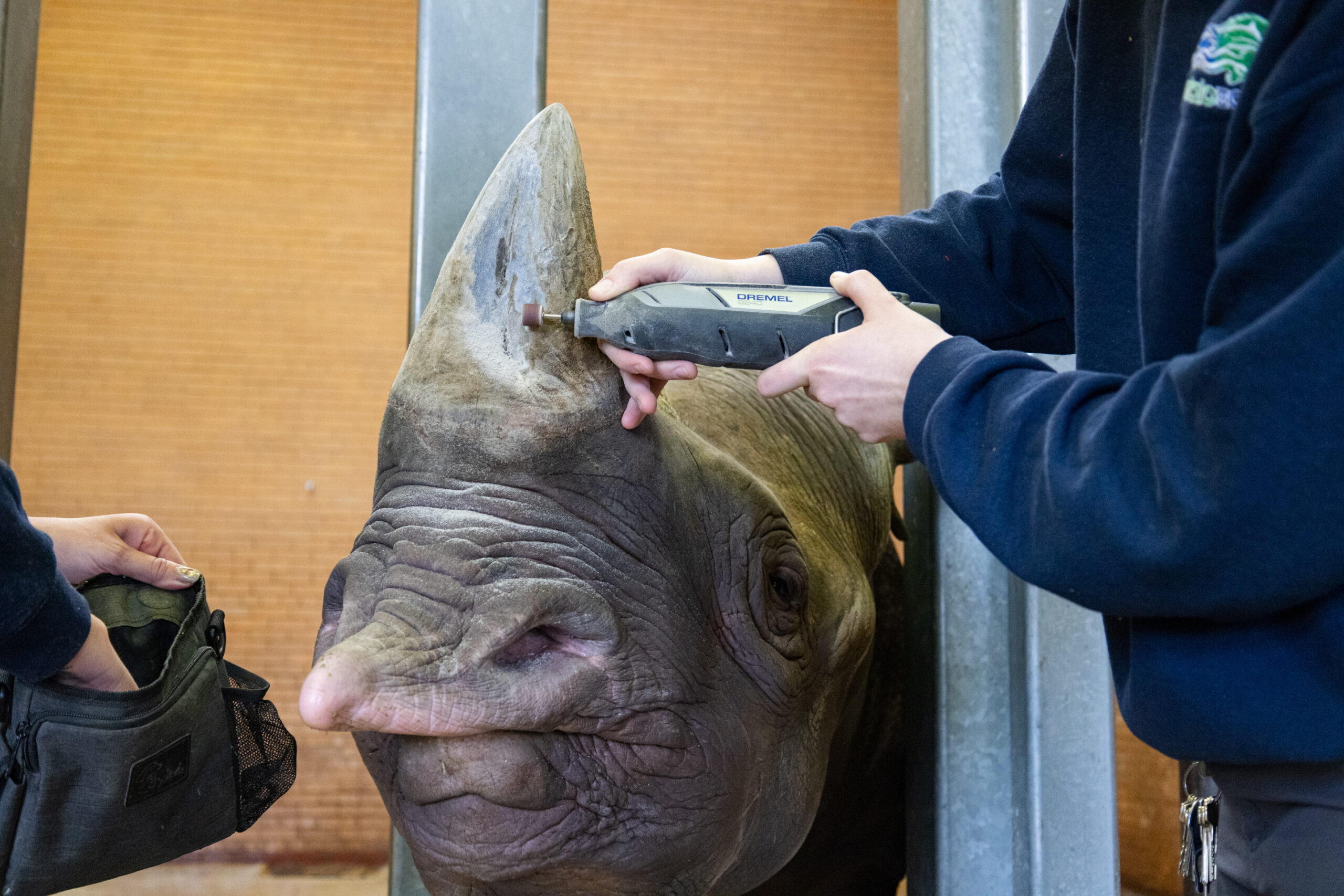
To do this, keepers use a handheld rotary tool to grind down the area around the crack, making the slit less severe over time and preventing it from deepening. It’s a similar concept to filing down a broken fingernail, just on a much, much larger scale.
Fortunately for our keepers, Romeo wasn’t too averse to the process in the beginning.
In order to get Romeo in the correct position, keepers used food to keep him occupied, and as he munched on tasty snacks, our staff got to work.
Keepers said it took just a couple days of getting him comfortable with the rotary tool before he had no hesitation, allowing work on his horn to start quickly and continue today. Romeo’s horn remains in a positive spot thanks to the attentive work of our keepers.
Just how trust between keeper and animal is needed to carry out tasks like treating the horn, it also helps with behaviors.
When Romeo arrived from Lincoln Park Zoo, he had already learned a handful of behaviors, including “lay down.” However, our keepers had a hard time getting him to replicate his lay down cue in his new home.
Recently, while treating his horn, keeper Sarah was crouched near Romeo when, unprompted, he laid down in front of her. Seeing an opportunity, she established her crouching down as a visual cue for Romeo to lay down.
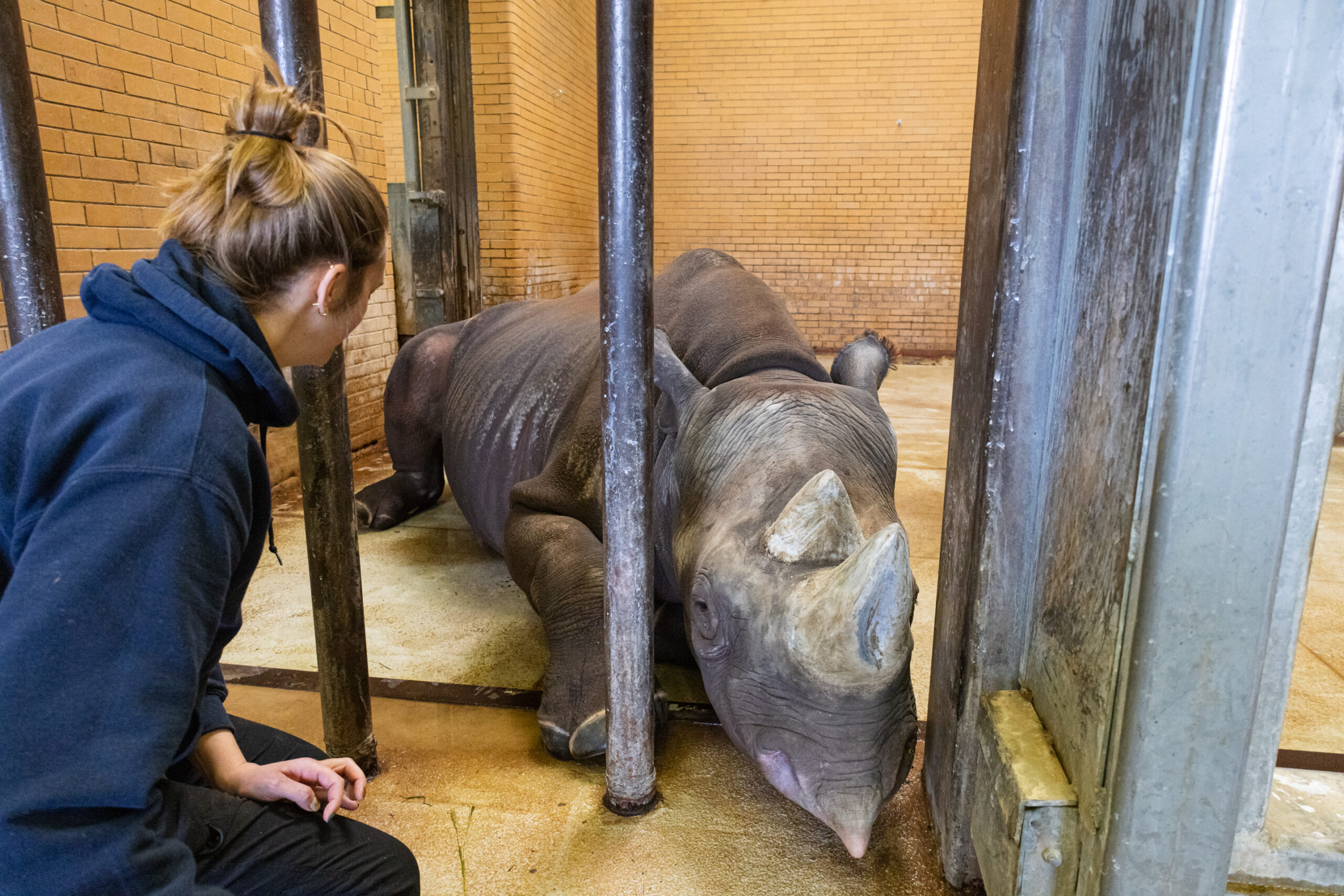
Ever since this unexpected and funny breakthrough, Romeo has gotten better and better at laying down on command, and keeper Sarah has even added in a verbal cue for the behavior.
While laying down may just sound like a fun behavior, it has a lot of value for providing treatment to larger animals like Romeo. If keepers ever need to get a look at his hoof, for example, being able to have him lie down on command allows them to get a thorough, close up examination of the lower parts of his body.
Both Romeo learning “lay down” and receiving treatment on his horn is rooted in the rapport our keepers have built with him, and it’s a testament to the incredible job our staff does on a daily basis to care for our animals.


